
 Free Delivery & Return
 365-Day Returns
 10 Million Happy Customers
 500,000 Products in Stock


Toppers and Protectors


Mattress toppers and protectors
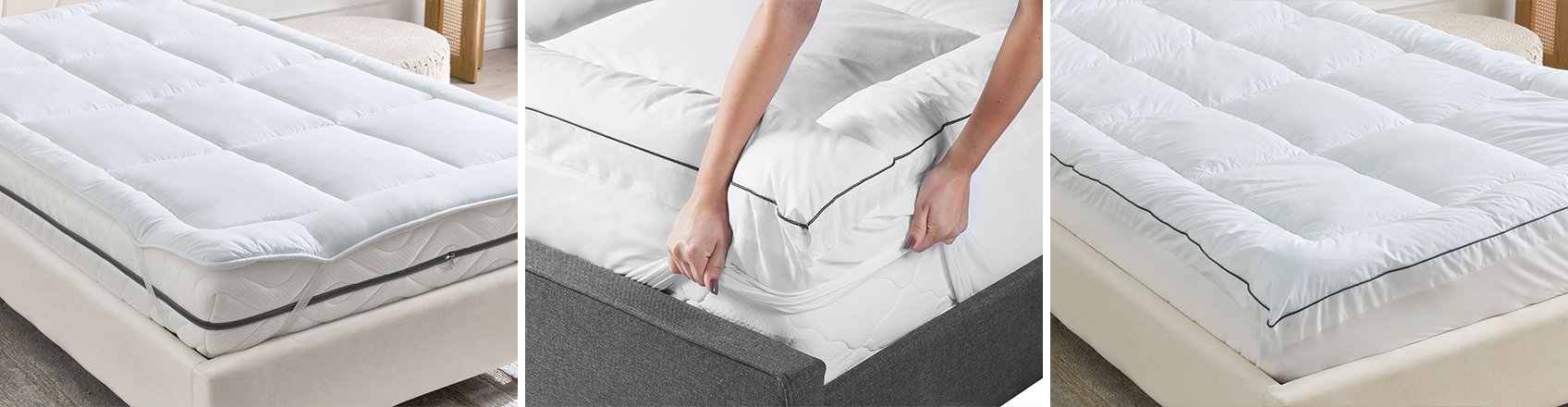
Mattress toppers and protectors include comfort layers that adjust the feel of a bed and protective covers that help keep the mattress clean. Start by deciding whether you need extra cushioning, firmer support or simply a barrier against everyday wear, as each product serves a different purpose.
What is the difference between a mattress topper and a protector?
A mattress topper is a padded layer placed on top of the mattress to change how the sleeping surface feels. Depending on its material and thickness, it can add softness, reduce pressure around the shoulders and hips or make a slightly firm mattress more comfortable.
A mattress protector is usually thinner and is designed mainly to shield the mattress from perspiration, dust and minor spills. It has less effect on comfort, so it is the better choice when you are satisfied with the feel of your mattress but want to help preserve its condition.
Which option should you choose?
- Choose a topper when the mattress is supportive but feels too firm or lacks cushioning.
- Choose a protector when hygiene and easier cleaning are the main priorities.
- Use both when you want to adjust comfort and protect the mattress at the same time.
- Replace the mattress itself if it is sagging, uneven or no longer provides proper support.
How to choose the right topper material?
The filling affects pressure relief, warmth, responsiveness and how easy the topper is to move. Consider your usual sleeping position, whether you tend to feel warm at night and how much you want to change the feel of the mattress.
Memory foam and PU foam
Memory foam follows the shape of the body and can reduce pressure around prominent areas, making it useful for side sleepers or anyone who prefers a close, cushioned feel. PU foam is generally more responsive and may feel easier to turn on. Foam toppers can retain more warmth than light fibre fillings, so check the cover and ventilation if overheating is a concern.
Latex and gel fillings
Latex provides a springier surface that responds quickly when you change position. It is a practical choice for sleepers who want cushioning without a deep sinking sensation. Gel-infused toppers are designed to improve temperature regulation, although the overall sleeping temperature also depends on the cover, bedding and mattress beneath.
Polyester fillings
Polyester toppers are usually lighter and easier to handle than dense foam models. They add a softer layer without strongly changing the support of the mattress and can be convenient for guest beds or occasional use. Check whether the whole product or only its cover is machine washable.
How thick should a mattress topper be?
A thinner topper makes a modest adjustment to the sleeping surface, while a thicker model creates a more noticeable layer of cushioning. Your body weight and sleeping position also matter: side sleepers often need more pressure relief around the hips and shoulders, whereas back and front sleepers usually benefit from a surface that does not allow the midsection to sink too deeply. Remember that adding a topper increases the total height of the bed. Measure the mattress and topper together before choosing fitted sheets, particularly when the mattress is already deep.
How to measure for the correct size
The topper or protector should match the mattress dimensions rather than the bed frame. Measure the mattress width and length and compare them with the product size, such as 90 × 200 cm, 140 × 200 cm or 180 × 200 cm. A poor fit can cause a topper to shift or a protector to pull away from the corners. Also check the mattress depth when choosing a fitted protector. The skirt or elasticated edge must be deep enough to sit securely around the sides, especially when a topper will be placed underneath it.
What to check before buying
- Confirm whether you need a comfort layer, a protective cover or both.
- Measure the mattress width, length and depth rather than relying only on the bed size.
- Choose a filling that suits your sleeping position and sensitivity to warmth.
- Check the topper thickness and make sure existing fitted sheets will still fit.
- Review the cleaning instructions and whether the cover is removable or machine washable.
- Look for straps or a non-slip surface if the topper may move during use.
Narrow down the choice by identifying the main problem first: pressure from a firm surface, unwanted warmth, mattress movement or the need for easier cleaning. Then compare the correct size, filling, thickness and care requirements rather than choosing on softness alone.