


Pendant Lights


Pendant lamps
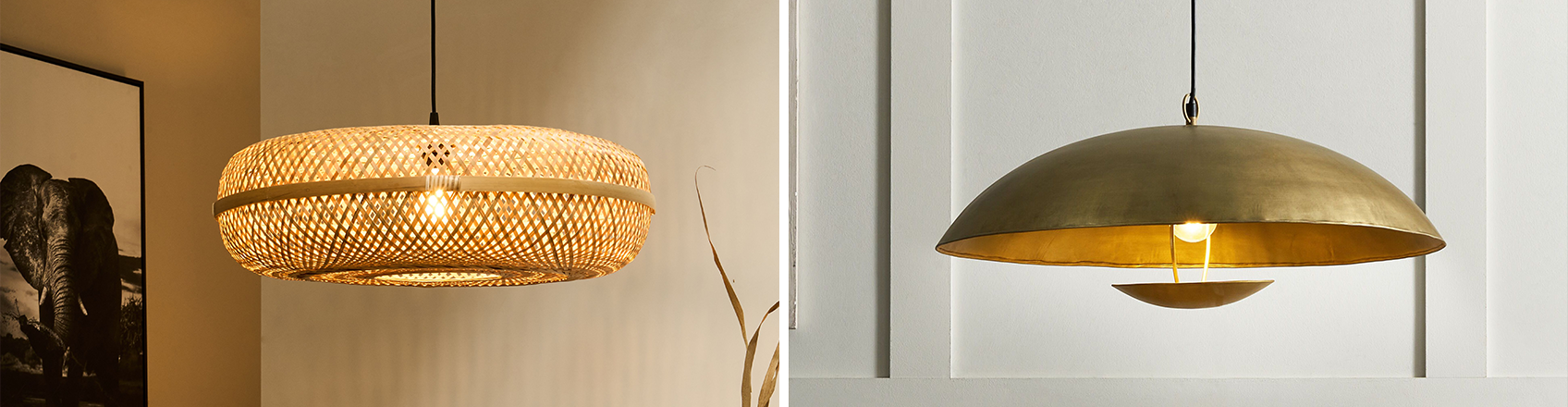
Pendant lights are suspended ceiling lamps that combine practical illumination with a decorative role. When choosing one, consider where it will hang, the size of the room or surface below it, the required light output and the total drop from the ceiling, as these factors affect both comfort and everyday use.
What makes pendant lights such a versatile lighting choice?
Pendant lights work as both decorative and functional lighting. Depending on the design, they can provide general room illumination, focused light above a table or work surface, or softer ambient lighting. Different shade shapes, hanging heights and numbers of light points make it possible to choose a fitting for compact rooms as well as larger open-plan spaces.
Which styles and materials can you choose from?
Pendant lamps are available in a wide range of materials and finishes. Fabric shades diffuse light softly and are well suited to bedrooms, living rooms and dining areas. Metal pendants can direct light more precisely and work particularly well above kitchen islands, desks and dining tables. Natural materials such as rattan and wood add texture and usually create a softer, more diffused lighting effect.
What types of pendant lights can you choose?
Adjustable pendant lights
Adjustable pendant lights allow the hanging height, and in some designs the direction of the light, to be changed. Height adjustment is especially useful above dining tables and kitchen islands, where the fitting needs to sit low enough to illuminate the surface without blocking sight lines. Always check the minimum and maximum hanging height in the product dimensions before buying.
Single pendant lights
Single pendant lights have one light point and offer a clean, simple appearance. They work well in smaller rooms, above bedside tables or over compact dining areas. Several matching single pendants can also be positioned in a row above a long dining table or kitchen island, provided there is enough spacing between each fitting.
Multi-light pendant designs
Multi-light pendant lamps use several bulbs or light points within one fitting, making them suitable for larger rooms and areas that need broader illumination. They can help define a dining zone or seating area in an open-plan interior. Before choosing one, check the overall width and drop so the fitting remains proportionate to the furniture and space below it.
Where do pendant lights work best in your home?
Pendant lights are commonly used above dining tables and kitchen islands, where they provide direct light and visually define the area. As a general guide, the bottom of the fitting can sit around 70–90 cm above a dining table, although the exact height depends on the size of the shade, ceiling height and sight lines across the room. In bedrooms, compact pendants can replace bedside lamps and free up surface space, while taller hallways and stairwells can accommodate fittings with a longer drop.
How much clearance do you need?
Where people need to walk underneath a pendant, make sure there is enough head clearance once the light is installed. This is particularly important in rooms with lower ceilings. Above a table or fixed piece of furniture, the fitting can hang lower because nobody needs to pass directly beneath it.
How do you choose the right size and light output?
Consider both the dimensions of the pendant and the area it needs to illuminate. A small single pendant can work well over a bedside table or compact dining area, while a wide shade or multi-light fitting is usually better suited to a larger table or open-plan room. Check the total drop from the ceiling as well as the shade width, particularly in rooms with lower ceilings.
Which bulb and colour temperature should you choose?
Check the required bulb base, maximum wattage and whether the bulb is included before buying. Warm white light is generally comfortable for bedrooms, living rooms and dining areas, while a more neutral light can be useful where clearer task lighting is needed. If you want to adjust the brightness, make sure both the lamp and the chosen bulb are compatible with a dimmer.
How does the shade affect the light?
The shape and material of the shade influence how light spreads through the room. Opaque metal shades tend to direct light downwards, which is useful for tables and work surfaces. Fabric, glass and woven shades can allow more light to spread around the room, although the exact effect depends on the colour, thickness and construction of the material.
Are pendant lights suitable for different rooms and conditions?
Many pendant lights are intended for dry indoor spaces such as living rooms, bedrooms, dining rooms and hallways. If you plan to install one in a bathroom or another area exposed to moisture, check the product's IP rating and installation instructions carefully. The required level of protection depends on where the fitting will be positioned, so a higher IP rating does not automatically make a lamp suitable for every part of a bathroom.
What should you check before buying a pendant light?
Before choosing a pendant lamp, check the shade dimensions, total hanging height, bulb requirements and the amount of light needed in the room. Consider where the light will hang and whether people will walk or sit beneath it, especially above dining tables, kitchen islands and in rooms with lower ceilings. Finally, make sure the material, finish and light colour work with the other lighting and furniture in the space.