Free Delivery & Return
 365-Day Returns
 10 Million Happy Customers
 500,000 Products in Stock

What You Need to Know About Kilim Textiles
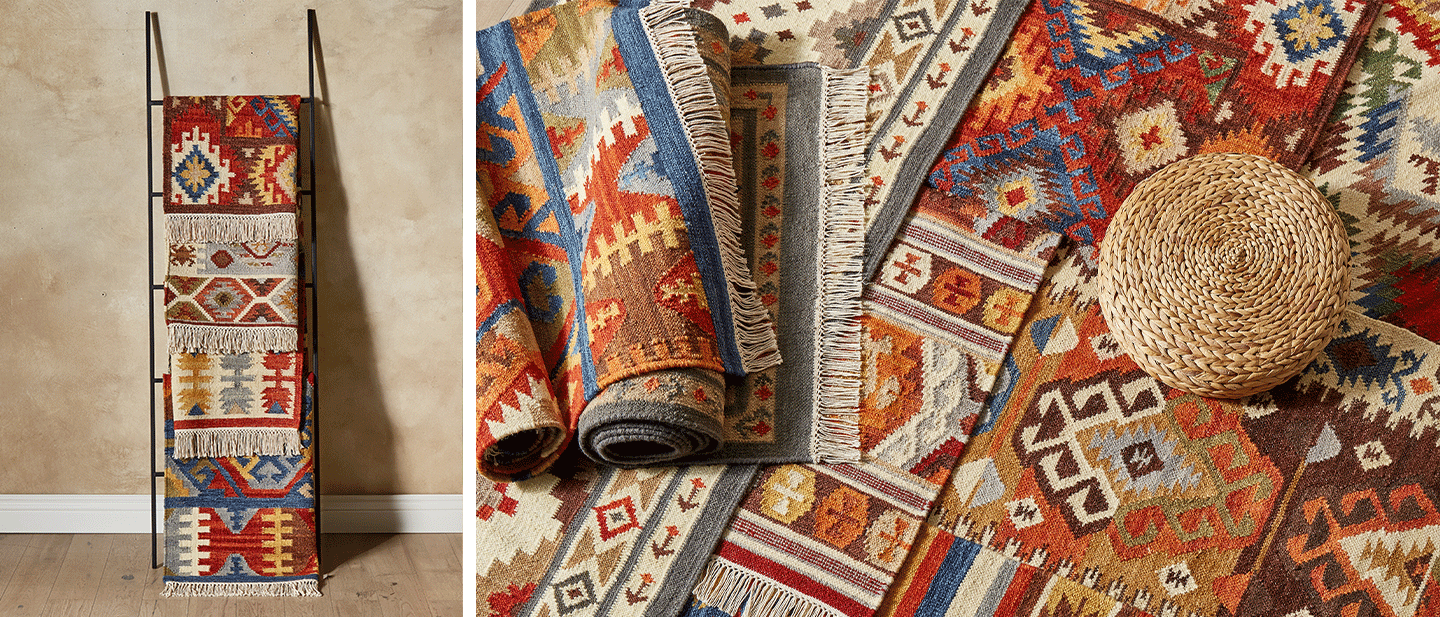
Kilims once hugely popular, have been forgotten for some time, but for several years now they’re returning into interior design trends. The first thing that comes to mind when you hear the word kilim is a traditional floor rug, but these textiles have so much more uses. Often, they serve as wall tapestry, bags, upholstery for furniture such as armchairs or pouffes, covers for all kinds of cushions, or as a sajjāda, a prayer rug. What distinguishes kilims among other rugs is the fact that even now they are completely handmade.
The extraordinary art of making Kilims
The process of weaving kilims is one of the most laborious and time-consuming techniques done without mechanical methods. The weaver profession requires talented hands, attention to details and patience.
A loom is the main tool used to create textiles in multicoloured, intricate pattern. The whole process starts with the preparation of the warp (called warping) a vertical row of threads, which means drawing in even up to two hundreds threads, which is why weaving one rug can take even a month. Weavers interweave threads vertically and tightly-knit horizontal threads (the weft) to cover the warp.
A beating comb is used to bind the vertical and horizontal fibres together, a type of hand tool, either separate or part of the loom, by which the weaver secures the threads so that they hold together creating a fabric with invisible loops. After the entire pattern has been woven, the fibres are secured from below and their ends form fringes at both ends. Thanks to the use of a loom, a rug is reversible, presenting the original pattern on the front and its mirror image on the reverse.
Oriental patterns and colours
With roots in Turkey and eastern countries such as Syria and Afghanistan, kilims are extremely colourful rugs with beautiful standout shades and detailed patterns. Patterns that can be found on these types of rugs are most often geometric or floral motifs. Repetitive, traditional multicoloured symbols catch everybody’s eye.
Due to the place of their origin, they can be described as ethnic and oriental in style. The dominant colours are those that can be obtained using natural dyes from plants, fruits or shrubs, e.g., red from madder, brown from hazelnut shells, yellow from chamomile flowers or blue from indigo stems.
See also: Vintage rugs
What is a Kilim made of?
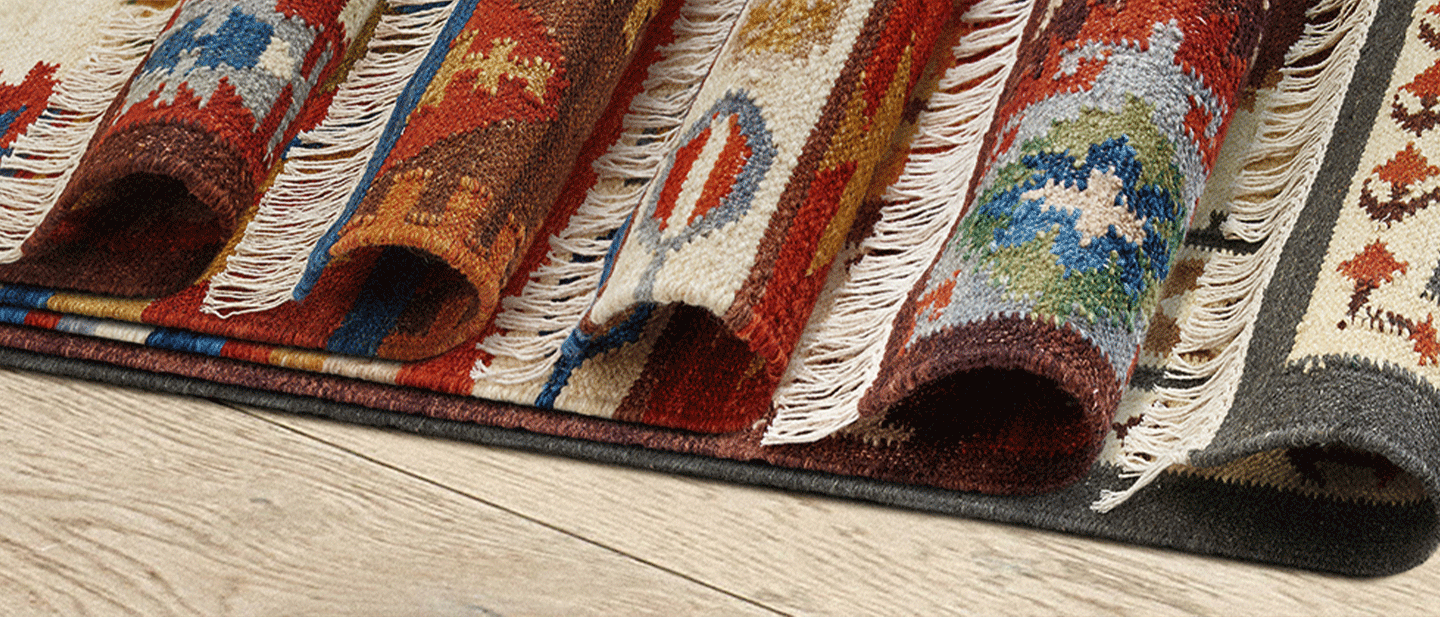
The best quality wool, coming from the fleece of New Zealand sheep, is used to make the kilims. Grazed on green hills, surrounded by clean air and fertile soil, the animals have a beautiful thick fleece, which they are happy to get rid of when it's time to shear. Why wool? Well, here are just a few reasons:
- Completely biodegrable and natural
- Extremely absorbent, retains moisture from the room and gives it back when the humidity in the air is too low
- Densely woven wool does not retain dirt or dust, as well as odours, which is why woollen rugs can be successfully used, for example, in the kitchen
- Suitable to high-traffic rooms, like a hallway or living room, as the fibres flattens but come back to shape after some time
Kilims trending in modern interiors
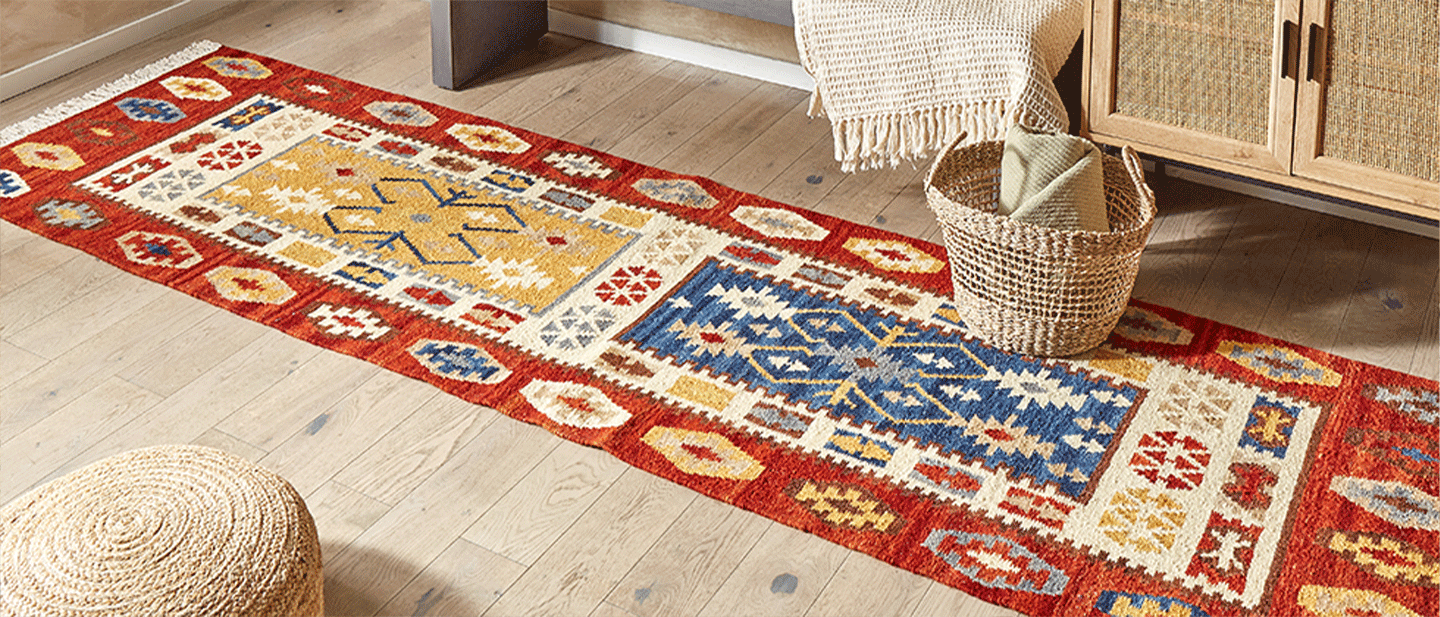
Kilims perfectly fit into modern interior design trends. Handmade, original soft accessories are what cannot be missing in modern interior design and this is what kilims are like. Unique rugs with characteristic patterns will work well in boho, vintage or mid-century style rooms.
They will also emphasize and accentuate the industrial decor or a Scandinavian style. One thing is for sure, wherever you place a kilim, it will be an eye-catcher and set the tone of the arrangement. The kilim basic function is protection against the cold surface and being a sound absorbing layer, but there is nothing wrong with using it as a purely decorative element, decorating the floor with it or hanging it as a wall accent piece.