
 Free Delivery & Return
 365-Day Returns
 10 Million Happy Customers
 500,000 Products in Stock


Sun Loungers


Sun loungers
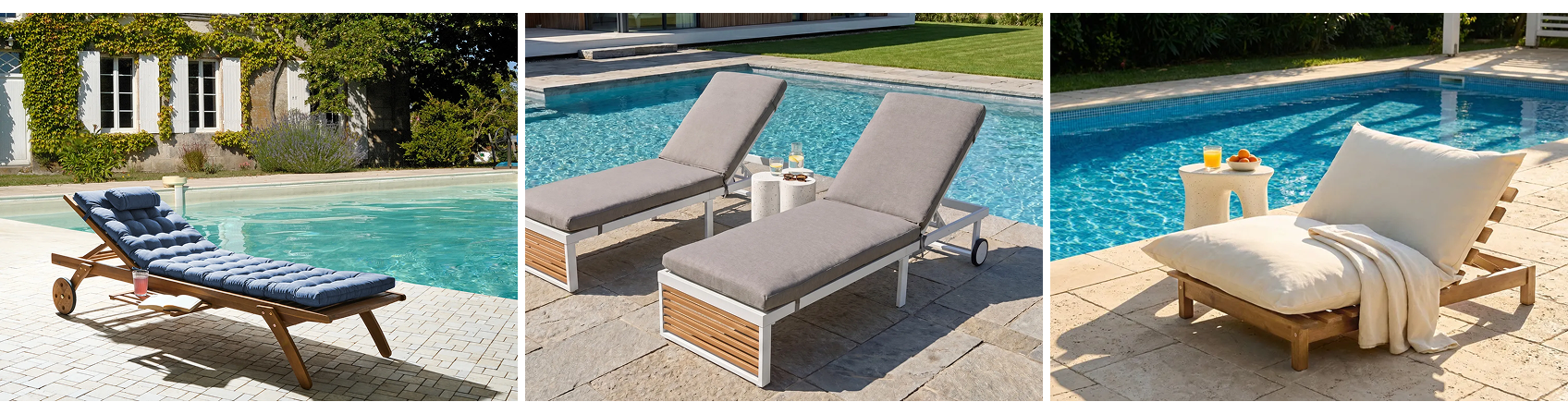
Sun loungers are designed for reclining and relaxing outdoors, with options ranging from adjustable garden loungers to flat daybed-style models. When choosing one, first consider the available space, the backrest positions and the frame and seat materials, as these details affect comfort, storage and everyday maintenance.
How to choose the right sun lounger
The best choice depends on how you plan to use it. An adjustable backrest is useful if you want to switch between sitting upright to read and reclining to rest, while a flatter design works well for sunbathing. For regular use, also check whether the lounger includes armrests, a headrest or cushioning and whether the seating position provides enough support.
- For reading and sitting: look for several backrest positions and good upper-body support.
- For sunbathing: choose a model that reclines sufficiently or can be positioned almost flat.
- For moving around: consider the product weight, folding construction or built-in wheels where available.
- For compact storage: check whether the lounger folds or stacks and measure the storage space before buying.
How much space does a garden lounger need?
Check both the product dimensions and the space required when the backrest is fully reclined. A sun lounger can take up considerably more floor area than a garden chair, so measure the intended spot on your patio, terrace or balcony rather than judging by width alone. Leave enough room beside and behind it to adjust the backrest, get on and off comfortably and walk around without moving other garden furniture.
What should you check when buying several loungers?
If you are placing two or more loungers together, calculate their combined width and allow a practical gap between them. This is particularly important around outdoor tables, parasols and poolside areas, where circulation space can quickly become limited. If the loungers will be stored together, stackable or folding models can reduce the amount of storage space required.
Which sun lounger material is best for outdoor use?
Frame and seat materials affect the weight, maintenance and appearance of an outdoor lounger. Metal frames are generally practical for contemporary outdoor spaces, while wooden loungers offer a more natural finish but may require periodic care to maintain their appearance. Synthetic materials are often straightforward to clean and can be a useful choice where low maintenance is a priority.
Are cushioned sun loungers comfortable?
A cushion adds softness and can make longer periods of reclining more comfortable, particularly on firm slatted or solid surfaces. Check whether cushions are included or need to be purchased separately. Outdoor cushions should be kept dry when not in use and stored according to their care instructions, as prolonged exposure to moisture can affect both the filling and the cover.
How to look after outdoor loungers
Cleaning requirements depend on the material, so follow the care information supplied with the individual product. Wipe away dirt and spills rather than allowing them to build up, and avoid leaving removable cushions exposed to persistent rain or damp conditions. Protective covers or sheltered storage can also help reduce unnecessary exposure when the furniture is not being used for longer periods.
Can sun loungers stay outside all year?
Outdoor suitability does not mean that every material benefits from permanent exposure to rain, frost, strong sunlight and changing temperatures. Seasonal storage or suitable protection can help preserve the finish and reduce maintenance. Before buying, consider where the lounger and any cushions will be stored during periods when they are not in regular use.
What to check before buying a sun lounger
Start with the available floor space, then compare the lounger dimensions in both upright and reclined positions. Check the adjustment mechanism, frame and seat materials, cushion requirements, product weight and storage options according to how often you expect to move or put the furniture away. For smaller outdoor spaces, folding or easily movable designs can be particularly practical, while a larger patio may allow you to prioritise wider seating and more generous reclining space.